
Speed is not a luxury anymore. It is survival. In 2026, blogging is more competitive than ever. You can write excellent content, do proper keyword research, and build strong backlinks. But if your site loads slowly, none of that will save you.
The foundation of a fast blog is simple: the right theme.
In this guide, you will learn:
- Why a lightweight theme matters
- How a heavy theme causes High bounce rate
- Why Poor Core Web Vitals damage trust and visibility
- How a silent Ranking drop happens
- And how all of this affects your Affiliate income
Let’s break it down in a practical way.
Why Theme Choice Matters More Than You Think
Most bloggers focus on content and SEO tools. Very few think deeply about the theme.
But your WordPress theme controls:
- Page structure
- CSS and JavaScript loading
- Layout behavior
- Mobile responsiveness
- Technical performance
A heavy theme adds unnecessary scripts, animations, and styling. That extra weight slows everything down.
A lightweight WordPress theme removes the noise. It loads only what is needed. That difference alone can cut your load time in half.
And load time changes everything.
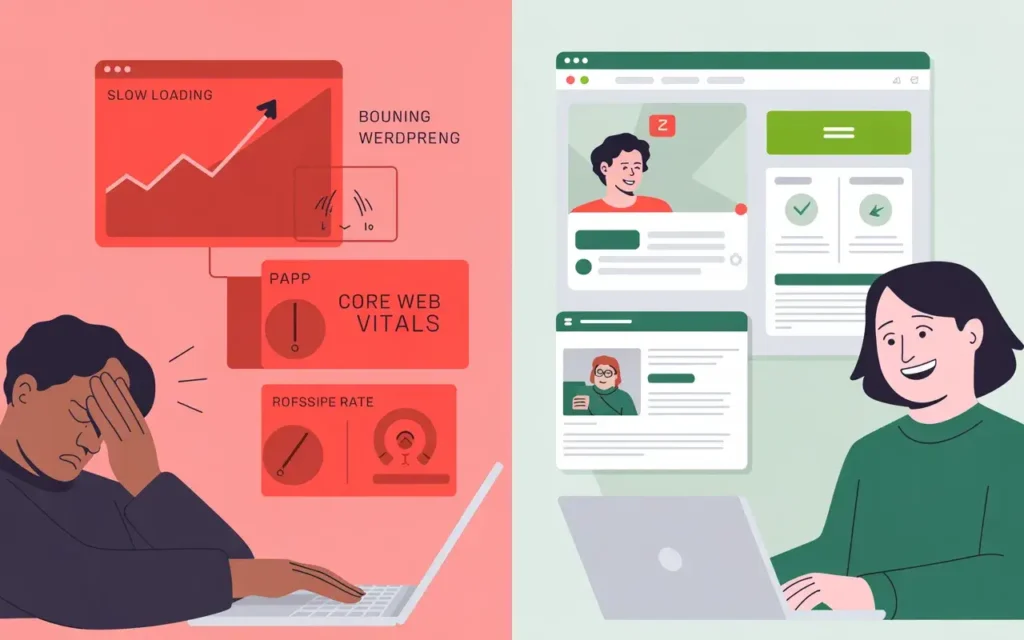
How a Heavy Theme Creates High Bounce Rate
Imagine a user clicks your article from Google.
They are interested.
They are ready to read.
But the page takes four seconds to load.
Images jump.
Ads shift content.
Buttons appear late.
Most users will not wait. They press back.
This is how you get a High bounce rate.
Bounce rate increases when:
- Pages load slowly
- Layout shifts confuse users
- The mobile experience feels clumsy
When users leave quickly, search engines notice. It sends a clear signal: “This page did not satisfy the visitor.”
Over time, that hurts your visibility.
Poor Core Web Vitals: The Hidden Performance Problem
Google now measures user experience using Core Web Vitals. These include:
- Largest Contentful Paint
- First Input Delay
- Cumulative Layout Shift
If your theme is bloated, you will often see Poor Core Web Vitals.
Common reasons include:
- Large CSS files
- Render-blocking JavaScript
- Unoptimized fonts
- Layout instability
Even with great content, failing technical performance standards weakens your site.
Core Web Vitals are not just technical numbers. They represent real user experience. A lightweight WordPress theme helps you pass these tests more easily.
The Slow Slide Into Ranking Drop
Ranking does not usually collapse overnight.
It slides.
At first, your article moves from position 4 to 7. Then from page 1 to page 2. Traffic drops slightly. You blame competition or algorithm updates.
But often, technical performance plays a big role.
When your site becomes slower than competitors, search engines adjust positions. A gradual Ranking drop begins.
You might update content, build links, or tweak keywords. But if the theme remains heavy, the core issue stays.
Speed is now part of SEO. A lightweight theme strengthens your technical foundation.
Affiliate Income Depends on Speed
If you run an affiliate blog, speed equals money.
Let’s think logically.
A user lands on your product review. If the page loads fast, looks clean, and feels stable, they trust it. They scroll. They read. They click your affiliate link.
If the page loads slowly, they hesitate. Trust drops. They leave before clicking.
Lower clicks mean lower conversions. Lower conversions mean reduced Affiliate income.
Even a small increase in load time can reduce conversion rates significantly.
A fast blog:
- Builds trust
- Improves engagement
- Increases link clicks
- Boosts revenue
A lightweight WordPress theme supports all of this.
What Makes a Theme Truly Lightweight?
Not all “fast” themes are actually lightweight. Marketing claims can be misleading.
A truly lightweight theme usually has:
- A small base file size
- Clean, minimal CSS
- No unnecessary page builder dependency
- Optimized script loading
- Mobile-first design
It does not overload your site with animations or complex features you will never use.
It focuses on performance first.
Design can still look modern and professional. Lightweight does not mean boring. It means efficient.
Key Features to Look for in 2026
When choosing the best lightweight WordPress theme for a fast blog, check these elements carefully.
1. Clean Code Structure
View the source. It should not look cluttered with excessive inline styling and scripts.
2. Minimal Dependencies
Fewer external libraries mean fewer performance bottlenecks.
3. Responsive Design
Mobile traffic dominates. Your theme must perform smoothly on smaller screens.
4. Schema Support
Structured data helps search engines understand your content.
5. Compatibility With Caching and CDN
A good theme works well with optimization plugins and content delivery networks.
These features help reduce bounce rate and protect your rankings.
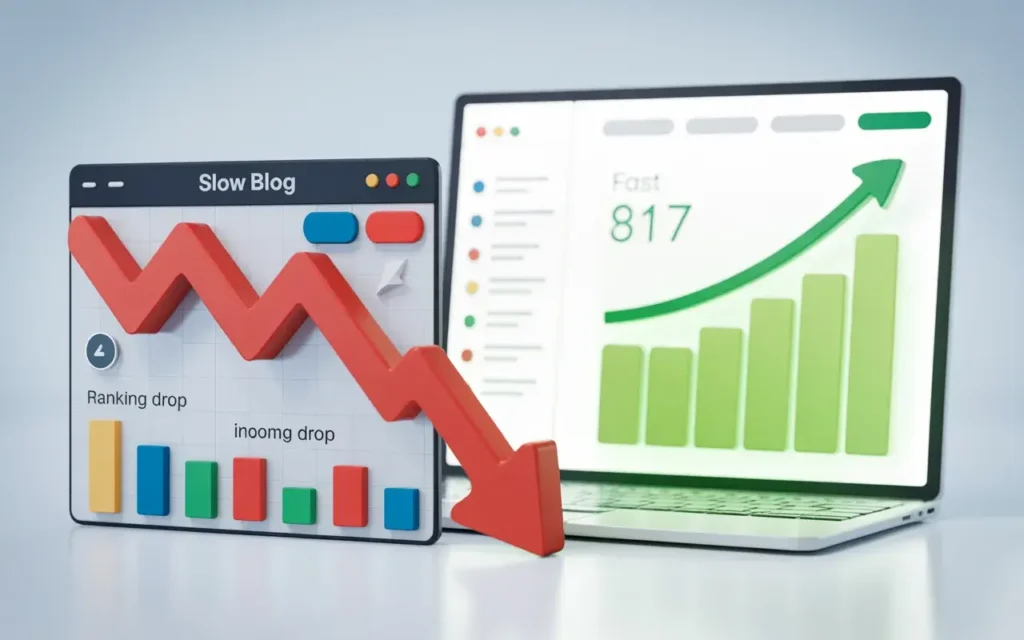
Real Example: Two Blogs, Two Outcomes
Let’s compare two similar blogs.
Blog A:
- Heavy multipurpose theme
- Load time: 4.3 seconds
- Poor Core Web Vitals
- High bounce rate
- Conversion rate: 1%
Blog B:
- Lightweight WordPress theme
- Load time: 1.7 seconds
- Strong Core Web Vitals
- Lower bounce rate
- Conversion rate: 3%
Traffic volume is the same.
But Blog B earns almost triple in affiliate commissions.
The difference is not content quality. It is performance.
Common Mistakes Bloggers Make
Many bloggers choose themes based on appearance alone.
Common mistakes include:
- Installing complex demo layouts
- Using too many animations
- Keeping unnecessary plugins active
- Ignoring speed tests
- Choosing themes based on popularity only
A beautiful demo site does not guarantee performance.
Always test a theme before committing. Use performance tools to check load time and structure.
When Should You Consider Changing Your Theme?
Sometimes changing the theme feels risky. But it may be necessary.
Consider switching if:
- Your bounce rate stays above 70%
- Your pages take more than three seconds to load
- Core Web Vitals consistently fail
- You experience unexplained ranking drop
- Affiliate income steadily declines
Before blaming content, review your technical setup.
Lightweight Theme and Long-Term Growth
Blogging in 2026 is about sustainability.
Search engines reward sites that:
- Load fast
- Deliver stable layouts
- Offer smooth mobile experiences
Users reward sites that:
- Feel trustworthy
- Are easy to read
- Respond instantly
A lightweight WordPress theme supports both.
It gives you room to scale. You can add content, ads, affiliate links, and tools without slowing everything down.
It is easier to optimize. It is easier to maintain. It is easier to grow.
Final Thoughts
The best lightweight WordPress theme for a fast blog is not just about speed tests. It is about user experience, search visibility, and revenue.
A heavy theme can cause:
- High bounce rate
- Poor Core Web Vitals
- Gradual ranking drop
- Decreased affiliate income
A lightweight theme builds a strong foundation.
Speed builds trust.
Trust builds engagement.
Engagement builds income.
If you are serious about blogging in 2026, treat your theme as a strategic decision, not a cosmetic one.
Your content deserves a fast home.