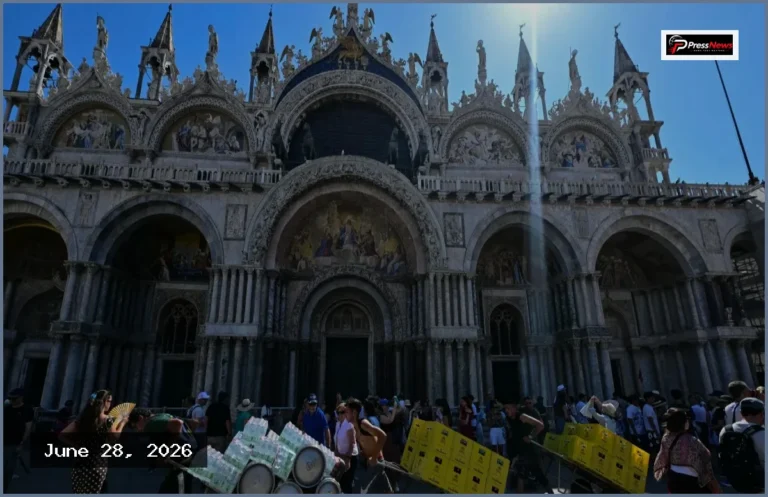
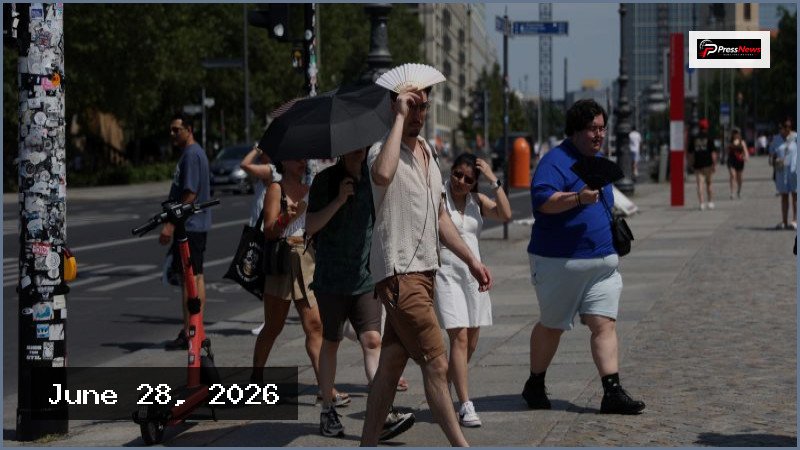
Across a vast stretch of Europe, from the Alps to Scandinavia, residents faced sweltering conditions on Saturday as a powerful heatwave, already linked to numerous deaths, pushed further eastward. Record-breaking temperatures climbed past 40 degrees Celsius (104 degrees Fahrenheit) in several locations, with Denmark recording its highest temperature ever. This follows a string of record-breaking June weather across Britain, France, Switzerland, and Germany as the system tracks toward Poland.
Scientists have noted that this event would be nearly impossible without the influence of human-driven climate change, which has significantly increased the likelihood of such extreme night-time temperatures compared to two decades ago. Meteorologist Karsten Brandt from Donnerwetter.de predicted the heat would peak over the weekend in parts of Germany at temperatures well exceeding 40 C.
Data from Germany’s National Meteorological Service indicated that a new national record of 41.3 C was reached on Friday near Saarbruecken, located on the French border. Meanwhile, the Danish Meteorological Institute recorded 37 C north of Aarhus on Saturday, marking the highest temperature since records began in 1874. Extreme heat warnings remain in effect for nearly all of Germany, where authorities are advising citizens to conserve water. Similar heat has also blanketed Poland, with temperatures rising well above 30 C throughout the country.
In France, the heat has resulted in dozens of deaths among both young and elderly populations. The extreme conditions have disrupted rail networks and power generation, led to temporary school closures, prompted alcohol bans, and caused the postponement of various outdoor activities. Italy has also been hit hard, with the health ministry issuing red alerts across 18 major cities, including Milan, Rome, and Florence, as temperatures are expected to reach 39 C. In the Italian Alps, the city of Bolzano experienced its warmest June night on record, failing to drop below 25.4 C.
Infrastructure is under significant strain, with reports of buckling roads and expanding train tracks causing major rail operators to adjust services. Deutsche Bahn is allowing customers to cancel long-distance travel without penalties to reduce network pressure, while National Express suspended specific trains in North Rhine-Westphalia. Near Hamburg, a section of a major motorway was partially closed after asphalt cracked under the intense heat.
Event organizers have also been forced to adapt. Lausanne Pride continued with added water and first aid support, while Milan’s Pride parade was delayed until 5 p.m. to avoid peak temperatures. Additionally, the Ironman European Championship in Frankfurt significantly shortened its cycling and running routes. The heat is expected to begin subsiding by the end of the weekend, with forecasts calling for heavy thunderstorms on Sunday. Experts attribute the prolonged heat to an ‘Omega block’ weather pattern, which traps a mass of hot air over the continent, causing demand for cooling devices to surge across Europe.