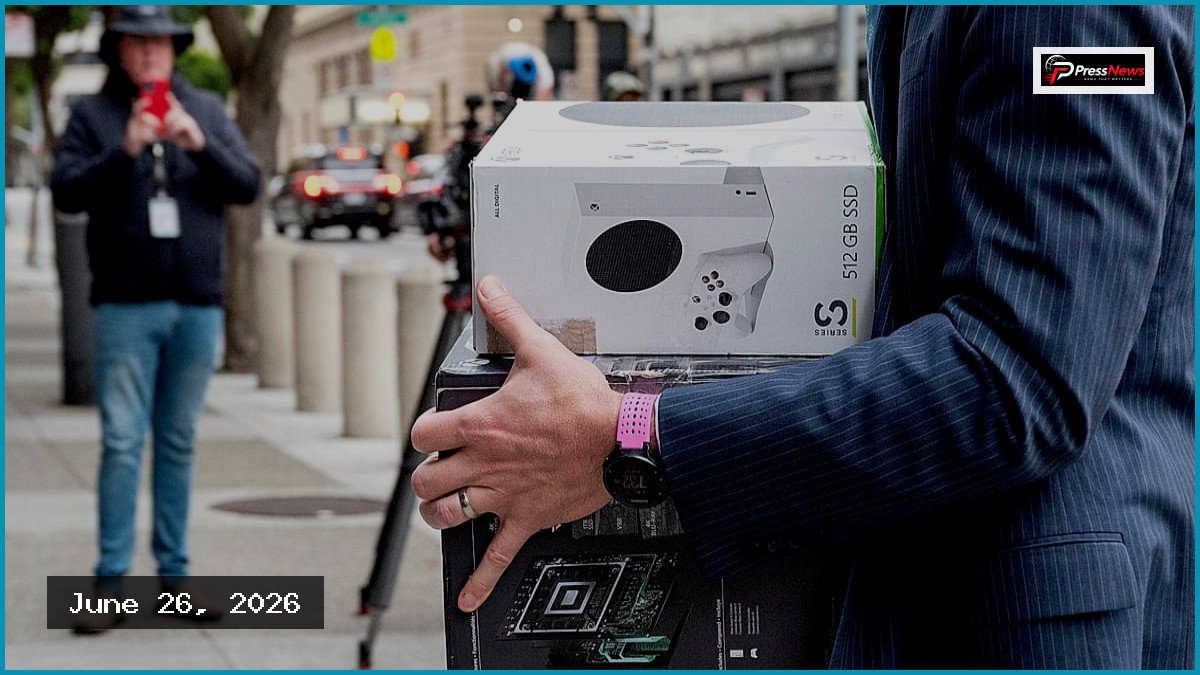
Microsoft announced on Thursday that it will implement a worldwide price increase for its Xbox gaming consoles, ranging between $100 and $150, effective August 1. The company cited the rising costs of memory and storage, driven by intense demand linked to artificial intelligence development, as the primary factor. In the United States, the entry-level Xbox Series S will see its price rise to $500 this summer, while the Series X will reach $800. While official European pricing remains pending, the 2TB model is set to be discontinued entirely. This move marks the third price hike for Xbox following increases in May 2025 and an October adjustment in the United States.
Apple followed a similar path on Thursday, confirming price increases for its Mac and iPad lineups after CEO Tim Cook previously warned that such adjustments were unavoidable due to escalating component expenses. The company characterized the current spike in demand for memory chips as an unprecedented challenge for the consumer electronics sector. In a statement, Apple noted that the rapid growth of AI data centers has created an extraordinary demand for storage components, leading to price surges at a speed and scale the company has not previously encountered.
The price adjustments impact several key devices: the entry-level MacBook Neo is increasing by $100, while the 512GB MacBook Air and 256GB iPad Pro Wi-Fi will both cost $200 more. Additionally, the 1TB MacBook Pro is seeing a $300 increase, and the 128GB iPad Air is rising by $150. Market analysts now suggest that iPhone prices could also see substantial hikes later this year. IDC analyst Nabila Popal noted that these increases exceed expectations, suggesting potential rises of up to $200 for Pro and Pro Max models, adding that the era of modest $50 price adjustments has likely passed. Apple shares fell 4.5% to $279.88 following the announcement.
The global surge in chip costs is largely attributed to the rapid build-out of data centers required for AI applications. This market, largely controlled by companies like Samsung, SK Hynix, and Micron, has faced persistent supply shortages. Microsoft reported that the cost of these components has already doubled and is projected to double again by late 2027. The Redmond-based firm also emphasized that, unlike computers or phones, gaming consoles are typically sold at or below their manufacturing cost.
The broader electronics industry is feeling the pressure, with Sony recently raising the price of the PlayStation 5 in Europe by €100 and Nintendo planning a 6% price hike for the Switch 2 starting September 1. Meanwhile, Valve launched its new Steam Machine at a starting price of $1,000. For Microsoft, these changes arrive after a challenging period for its gaming division, which underwent a major restructuring in February following revenue declines and underwhelming performance from new software titles.