
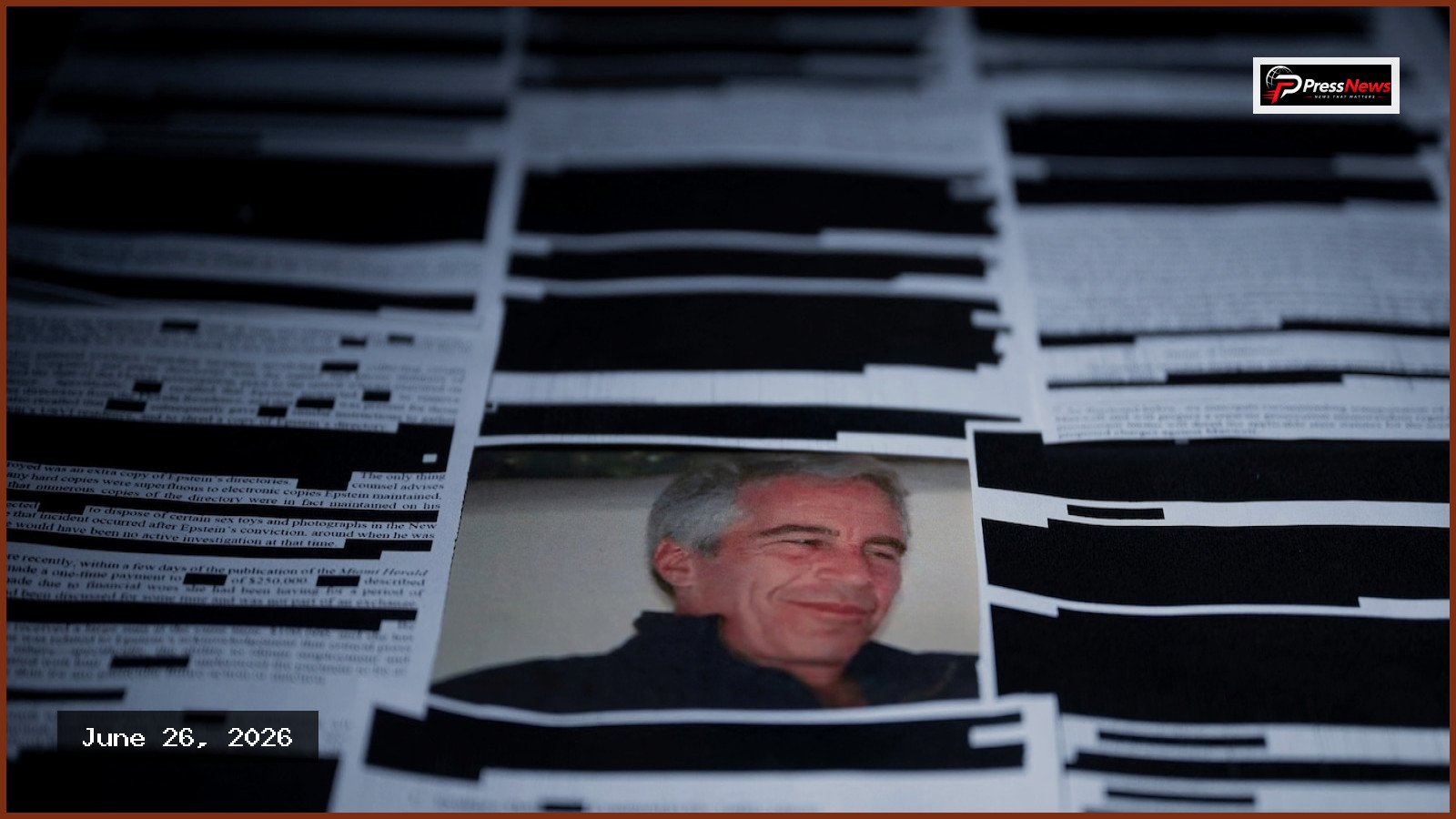
A federal judge is compelling the Department of Justice to release unredacted versions of specific documents concerning the late sex offender Jeffrey Epstein, or alternatively, to provide a clear legal justification for why those materials remain hidden. U.S. District Judge Emmet Sullivan ruled in favor of an independent journalist who initiated a lawsuit regarding the withheld records, determining that the Trump administration likely failed to adhere to the requirements set forth by the Epstein Files Transparency Act.
The Department of Justice has been granted a deadline of July 2 to provide the records with reduced redactions—specifically identifying email senders and recipients, as well as the identities of co-conspirators mentioned in a draft indictment—or to formally explain why such redactions should be maintained. Furthermore, the judge mandated that the department publish a comprehensive log detailing all redactions applied to the files.
Among the records covered by the judicial order are the original notes from an FBI interview with a woman who accused former President Donald Trump of assault. Although those specific claims were never corroborated and have been denied by Trump, the DOJ has previously released reports of such interviews but withheld the underlying raw notes. The administration was also instructed to disclose the identities of participants in email threads that discussed the recruitment of young women.
One email sent to Epstein in 2015 remarked, “The key are the 14 to 15 year old girls–i am a sexual pervert because i say they are now of a reproductive age? My heart goes out to you brother … being called a sexual pervert is no fun.” Another message from 2017 stated, “She is like Lolita from Nabokov , femme miniature 🙂 So now I should send you her type of candidates only.”
Judge Sullivan dismissed arguments raised by the DOJ against releasing the records, finding that the Public Integrity Project had successfully proven that journalist Katie Phang suffered harm due to the lack of transparency. The court ruled that Phang is experiencing the exact lack of transparency that Congress intended to mitigate, and that obtaining this information would assist her professional endeavors. Representatives from the Public Integrity Project stated that the decision ensures public access to details regarding Epstein’s network, alleging the government disregarded Congressional law to protect powerful figures.
While the DOJ began releasing thousands of pages late last year following the implementation of the Epstein Files Transparency Act, the department has faced significant backlash. Lawmakers have scrutinized potential violations of the law, including missed deadlines and what some Democrats described as unnecessary redactions that failed to protect victim identities. Acting Attorney General Todd Blanche has maintained that the agency is in compliance, while noting that millions of pages remain withheld due to irrelevance, duplication, or explicit content. Meanwhile, the department’s internal watchdog initiated an audit in April to investigate the agency’s adherence to the legislation.


