
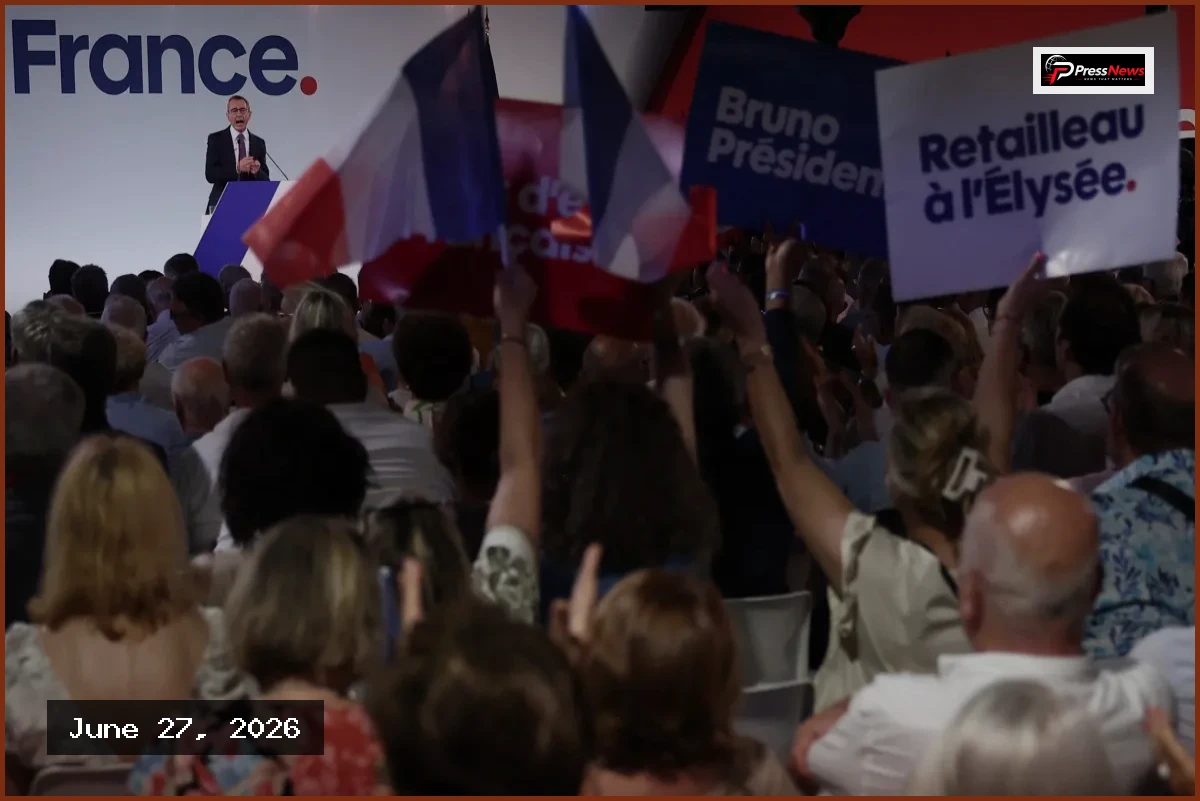
The field for the 2027 French presidential election is currently vast, resembling a massive marathon starting line. While there are a few genuine contenders, the list includes many who simply wish to be seen, with the total number of individuals who have declared or are considering a run reaching 47, according to the website candidator.fr. Of these, roughly 30 might be viewed as serious or semi-serious candidates. This figure is significantly higher than previous elections; for comparison, there were 12 candidates in 2022, the record stood at 16 in 2002, and there were only six in 1965.
Many observers fear that this scattered field will benefit political extremes in the first round next April, potentially creating a second-round run-off between Jordan Bardella of the Far Right and Jean-Luc Mélenchon of the Far Left. The theory is that if the Far Right secures the lead with approximately 30 percent, the dilution of the vote among other candidates could allow the Far Left to reach the run-off with just 17 to 20 percent, effectively handing the presidency to the Far Right.
However, this scenario may be misleading. To run, candidates need 500 signatures from elected officials, a hurdle that even Marine Le Pen found difficult previously. Furthermore, the race is expected to consolidate around a few major candidates in the final weeks. There is also an emerging sentiment against Mélenchon among center-left and moderate voters, who may rally behind a primary candidate from the center, such as Edouard Philippe or Gabriel Attal, to avoid a run-off between the two extremist options.
The moderate left remains fragmented, with figures like Raphaël Glucksmann, Karim Bouamrane, and Jérôme Guedj having declared, while others like François Hollande or Bernard Cazeneuve are reportedly considering it. The center and center-right are navigating their own unofficial primary via opinion polls, with Philippe and Attal agreeing that the weaker of the two will withdraw next year, while Bruno Retailleau remains committed to representing the Gaullist Les Républicains.
While relying on opinion polls to filter candidates is imperfect and potentially dangerous due to their transient nature, it has become a necessary substitute for the lack of strong, traditional party structures in France. Ultimately, while having an abundance of moderate candidates currently adds uncertainty, the field is expected to narrow significantly by the New Year.


