
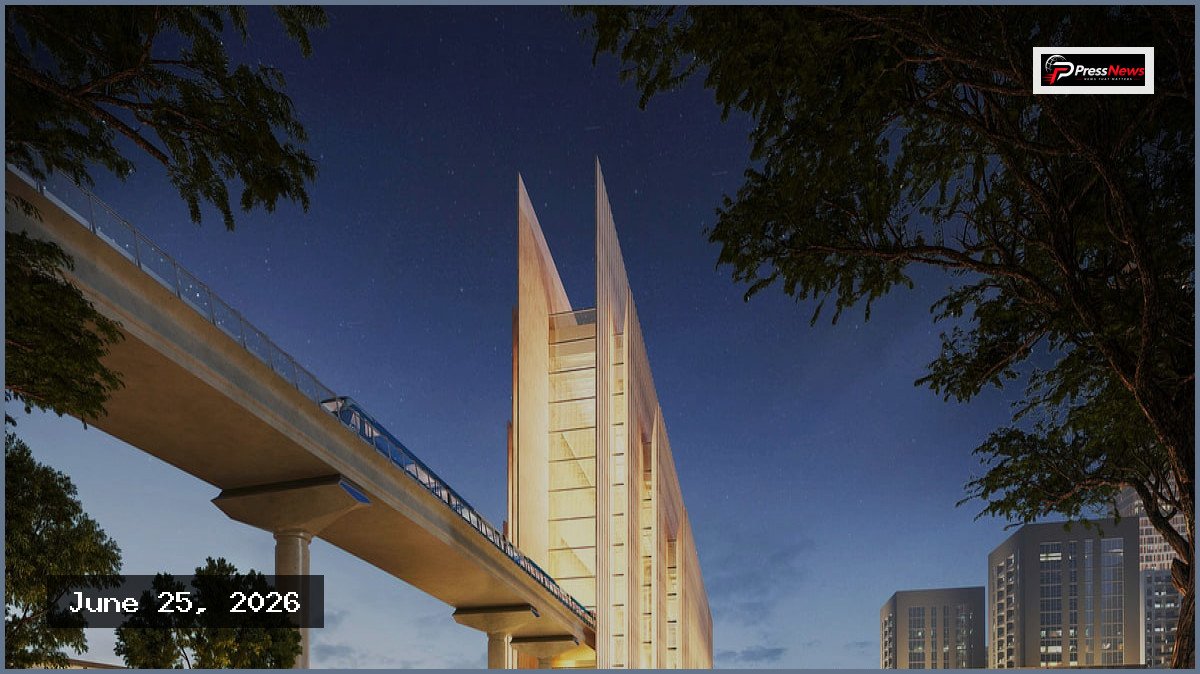
The rail network in Dubai is poised for significant growth through the introduction of the upcoming Dubai Metro Blue Line and the newly proposed Dubai Metro Gold Line. These infrastructure projects are intended to enhance overall connectivity by linking rapidly developing residential neighborhoods, major business districts, and essential transport hubs across the emirate.
The Dubai Metro Blue Line will feature 14 stations distributed across two distinct branches, focusing on connecting areas in northern and eastern Dubai while facilitating smoother transit to Dubai International Airport (DXB). Starting from Al Jaddaf and extending east, the route includes the Creek Interchange, which provides a connection to the Green Line, and the Dubai Creek Harbour (Emaar Properties Station). This particular station is notable for its ambitious design, as it is projected to reach a height of 74 metres, potentially becoming the tallest metro station globally.
A second branch starts at the Centrepoint Interchange in Al Rashidiya, linking to the existing Red Line and heading south. These two branches are scheduled to merge at International City 1, which will function as a vital junction within the network. This station is set to become the largest underground interchange in the entire Dubai Metro system, spanning more than 44,000 square metres. It is engineered to handle a daily capacity of 350,000 passengers, serving as a primary link to ensure efficient travel citywide.
A primary objective of the Blue Line is to provide direct and convenient access to Dubai International Airport. Current projections suggest that residents living along the alignment could commute to the airport in approximately 20 minutes. Authorities are currently finalizing whether the route will integrate through the established Red Line stations at Terminals 1 and 3 or utilize a new, dedicated facility for airport access.
While specific site details for the Gold Line are still being finalized, officials have outlined the intended route and the regions that will benefit from this development. The Gold Line is planned to include 18 stations serving 15 strategic locations throughout the city. The route will span from Al Ghubaiba to Jumeirah Golf Estates, bridging older urban districts with newer developments to support both short-term local travel and long-distance commuting. It will integrate with the current metro infrastructure and future Etihad Rail passenger services at key interchanges, including Al Ghubaiba for the Green Line, Business Bay for the Red Line, and both Meydan and Jumeirah Golf Estates for future rail links.
The Gold Line is expected to serve approximately 1.5 million residents and provide transit support for 55 major real estate projects. By strengthening ties across these fast-growing residential and commercial corridors, the project aims to optimize travel options for the city’s population and enhance the overall efficiency of Dubai’s expanding rail network.


