A research initiative coordinated from Cáceres has successfully recovered human DNA dating back more than 2,000 years from caves located in Spain and Portugal. This scientific breakthrough provides fresh opportunities for researchers to reconstruct the histories of prehistoric human populations. The project, led by Hipólito Collado and featuring collaboration from teams across Spain, Portugal, the United Kingdom, Germany, and China, demonstrates that rock surfaces can effectively preserve traces of human genetic material across several millennia.
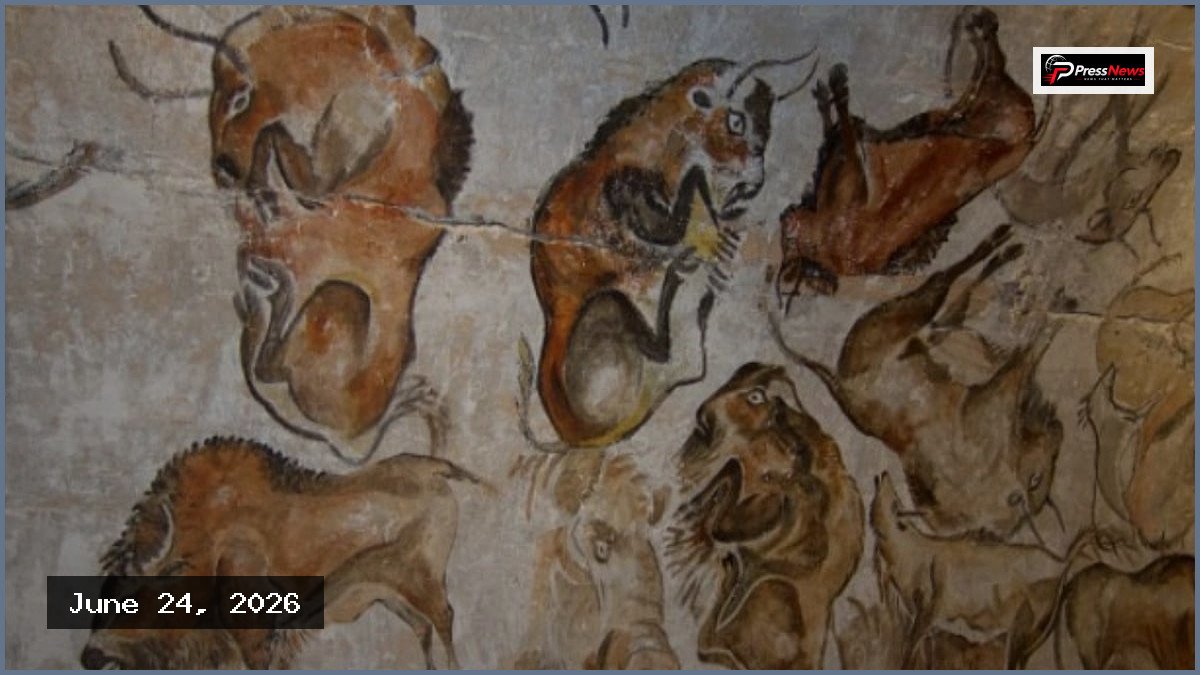
This study, which appears in the journal ‘Nature Communications’, is a component of the First Art project. This project originally emerged from research into rock art within the Maltravieso cave in Cáceres, a site home to some of Europe’s most ancient paintings. Building on these initial findings, the research team expanded its scope to include the chemical composition and dating of the earliest artistic expressions throughout the Iberian Peninsula.
In partnership with investigators from Germany’s Max Planck Institute for Evolutionary Anthropology, the team began exploring the recovery of genetic material directly from rock-art surfaces. This method represents a significant shift from traditional substrates like bone tools, sediments, or skeletal remains, which have long been the primary sources for ancient DNA analysis.
The scientists conducted an analysis of 24 rock-art panels spanning eleven different caves across Spain and Portugal using sophisticated genetic extraction and sequencing techniques. They identified ancient human DNA on a pigment-covered surface at Portugal’s Escoural cave, as well as in unpainted sections of the same site and the Covarón cave in Asturias. This marks the first definitive evidence that cave walls can maintain human DNA for thousands of years, providing a novel way to examine how prehistoric humans utilized these spaces.
Among the samples collected, researchers identified DNA belonging to three women and one man, while one sample could not be definitively sexed. These findings suggest that cave walls serve as biological archives of human activity. The team hopes to apply these minimally invasive techniques to other archaeological sites in the future, further expanding the potential of this new field in archaeogenetics.