
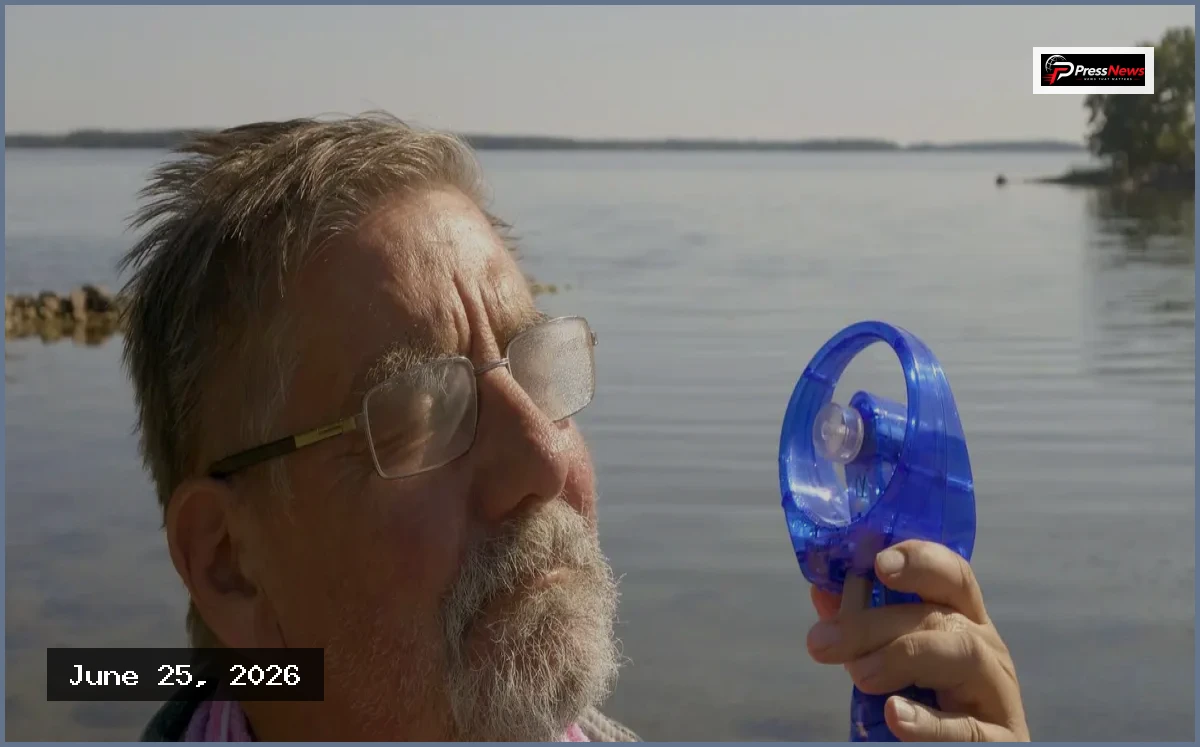
In many regions across the globe, 25C (77F) is considered a typical summer day, yet in Sweden, such temperatures feel notably warm, prompting questions about how the nation defines a heatwave and prepares for future climate shifts. While there is no standard international definition for a heatwave, with each country setting its own criteria, Sweden generally considers a period where temperatures reach at least 25C at some point during the day for at least five consecutive days to be a heatwave.
The national meteorological institute, SMHI, provides a more granular classification for these events. They define “high temperatures” as the mercury hitting at least 26C for three days in a row, while “very high temperatures” are categorized as 30C for three consecutive days. If the heat intensifies, reaching 30C for five consecutive days or 33C for three days in a row, it qualifies as “extremely high temperatures.” According to Martina Söderström, an expert from the engineering consultancy Sweco, extreme heat is a relatively new challenge for Sweden. She notes it has only truly become an issue over the last ten years, specifically citing 2018 as a wake-up call that brought long heatwaves and the country’s hottest July in over 250 years, along with a record number of wildfires.
A major factor in why Sweden feels the heat so acutely is that the country’s infrastructure is built with cold weather in mind. Buildings are designed to be well-insulated, but they are generally not equipped to protect residents from intense sunlight or heat. The common absence of ceiling fans or air conditioning makes these well-insulated structures difficult to cool down once they have warmed up. Furthermore, the Swedish summer features exceptionally long days, with over 18.5 hours of sunlight in Stockholm and 17.5 hours in Malmö, while the sun does not set at all in the far north for months. This lack of darkness means temperatures often remain high throughout the night, leaving little opportunity for people to recuperate and putting significant stress on vulnerable individuals.
In 2024, Sweco investigated how European cities like Stockholm can build resilience against increasingly frequent heatwaves. Data indicates that by 2100, the number of annual heatwave days in Stockholm is expected to rise by 150 percent. Similar increases are projected for other Scandinavian capitals, with Copenhagen facing a 160 percent rise and Oslo a 140 percent increase. Söderström explains that Nordic countries have historically prioritized cold protection, whereas cities like Rotterdam and Brussels are further ahead in measuring heat and developing mitigation plans.
Söderström argues that natural solutions are a vital piece of the puzzle. Urban environments often lack shade and greenery, and the use of hard surfaces like concrete, asphalt, and metal roofs absorbs and re-emits heat, worsening the effect. Integrating trees and water bodies into city planning provides essential cooling through shade and the release of water vapour. She suggests that Sweden can learn much from warmer nations by adopting better building placement, incorporating covered verandas, using lighter construction materials, and allowing better airflow through urban areas.
These prolonged heatwaves do not just affect sensitive groups like children and the elderly; they impact the entire fabric of society, including agriculture, forestry, and water security. Söderström emphasizes that the need to act is urgent, as these conditions are expected to persist for at least another 80 years. By planning ahead and measuring risk areas now, Sweden can adapt to create more resilient cities for the future.