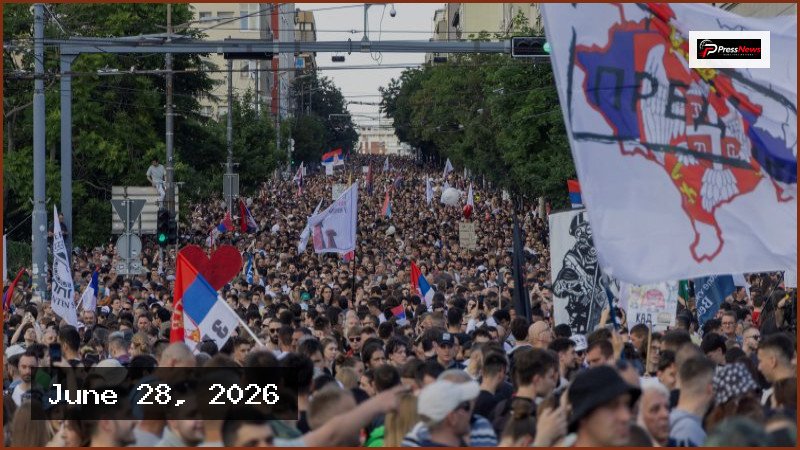
Serbian President Aleksandar Vucic declared on Saturday that he would step down from his position within a few weeks, paving the way for early presidential and parliamentary elections. This announcement follows eighteen months of persistent anti-government demonstrations throughout the nation. Vucic, who has maintained power as either president or prime minister for the past twelve years, faced intensifying pressure from student-led anti-corruption protests. The public unrest was largely ignited by the tragic collapse of a railway station awning in the northern city of Novi Sad in November 2024, an incident that resulted in 16 deaths.
Protesters, along with various opposition factions and rights organizations, argue that the railway station disaster is evidence of widespread government corruption and the mismanagement of large-scale infrastructure projects. During a pro-government rally in Belgrade, Vucic addressed his supporters, stating, “I will be president for only a couple more weeks, and then I will resign.” While his second and final mandate was scheduled to conclude in mid-2027, the president indicated he would work to ensure his Serbian Progressive Party (SNS) secures victory in the upcoming early votes. He suggested naming the winning electoral list “United Serbia,” though he did not provide a specific date for his departure or the dissolution of parliament.
Political analysts suggest that Vucic is unlikely to exit the political scene entirely. His resignation could create a pathway for him to assume the role of prime minister, a move that would continue his long-standing influence over the country’s governance. Expert Radivoje Grujic noted that this development is not the end of Vucic’s political career, suggesting he likely has a strategic plan to maintain control while maneuvering through the current crisis. The decision comes after a string of rallies that represent the most significant protests in Serbia since the 2000 overthrow of Slobodan Milosevic.
Student activists and opposition leaders maintain that they will challenge Vucic and the SNS in the upcoming elections. Savo Manojlovic, leader of the Move-Change movement, claimed that the president’s decision to call for early elections is a desperate attempt to prevent his own downfall in the face of strong public support for the student-led movement. While the presidency is largely ceremonial, Vucic has consistently held significant sway over his party and government policy, and he has previously not ruled out a return to the prime minister’s office.
Addressing supporters in intense heat, Vucic characterized the protesters as individuals aiming to destabilize the country, even accusing them of collaborating with foreign powers—claims that the demonstrators have denied. As Serbia continues its path toward potential European Union membership, the government faces demands to improve the rule of law, eliminate corruption, and address issues related to organized crime. During his address, Vucic promised to fight corruption and pledged economic improvements, including higher pensions and better healthcare services, even as opposition figures continue to accuse his administration of stifling media freedom and engaging in violence against political rivals.