
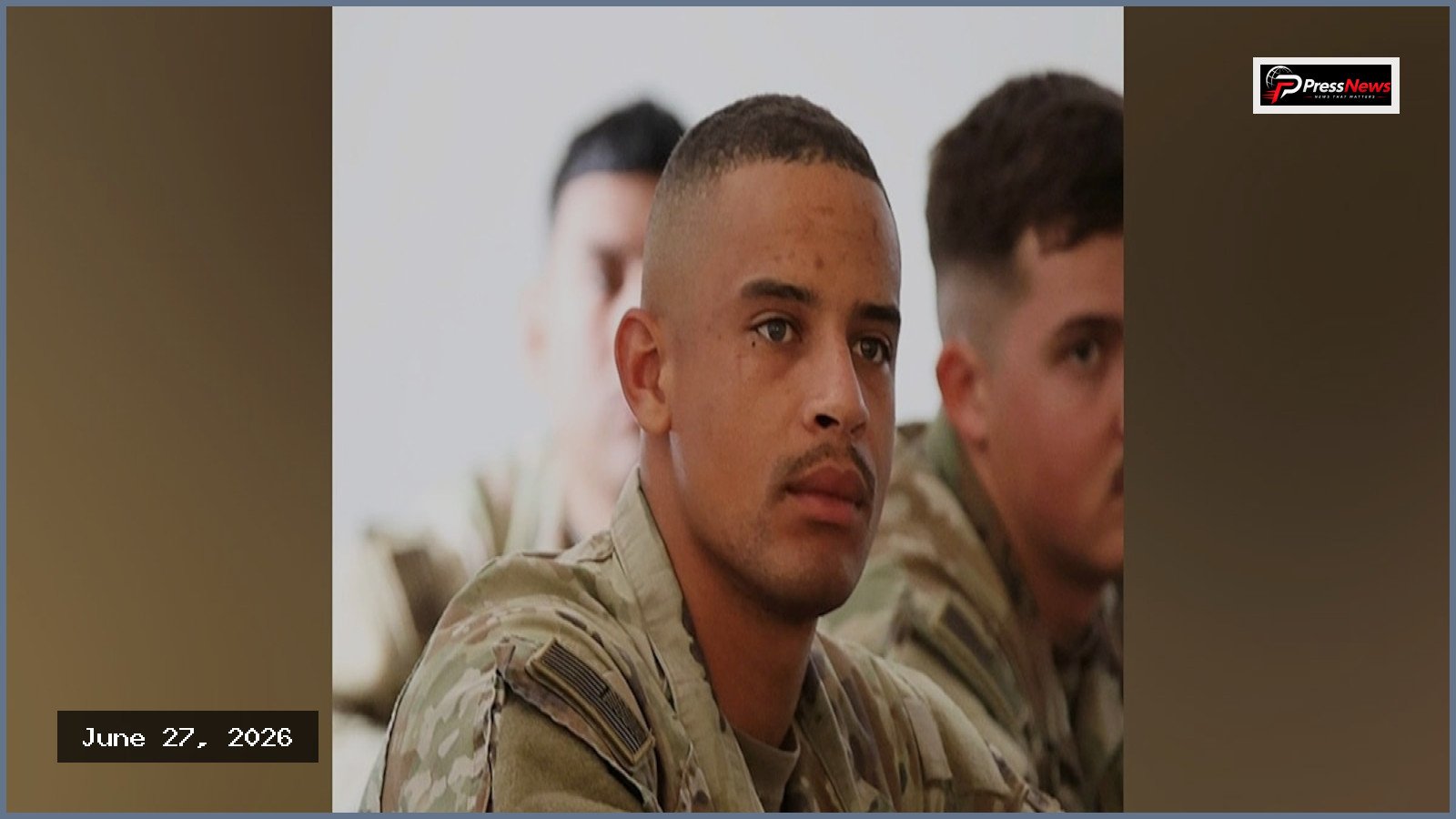
A U.S. soldier lost his life earlier this month after being hit by an M2 Bradley fighting vehicle during a large-scale military training operation in California, according to an Army spokesperson. The victim, 29-year-old Adrian Bonsey, was a combat engineer attached to the 3rd Infantry Division based at Fort Stewart in Georgia.
The incident occurred at approximately 4:30 a.m. on June 10 within a training zone in the Mojave Desert. At the time of the tragedy, Bonsey was on foot during a period of limited visibility when he was struck by the 27-ton armored vehicle. Authorities have confirmed that the circumstances surrounding the death remain under active investigation.
Maj. Gen. John Lubas, commander of the 3rd Infantry Division, expressed the severity of the loss in a public statement. He described Bonsey as an exceptional service member who was deeply committed to the division’s mission and the nation. He emphasized that the leadership is devastated by the news and is currently providing full support to the family, loved ones, and fellow soldiers grieving during this challenging period.
A native of New York, Bonsey enlisted in the Army in 2023. He had been stationed at Fort Stewart for two months prior to the accident, having previously served at Fort Carson in Colorado and completed a deployment to Poland in 2024. The M2 Bradley is a specialized combat vehicle typically operated by a three-person crew and designed to transport six additional troops, providing fire support with a 25mm chain gun, an M240C 7.62mm machine gun, and TOW anti-tank missiles.
At the time of the event, Bonsey was participating in a significant training rotation at the National Training Center in the Mojave Desert. This venue serves as the Army’s primary facility for combat readiness, where units spend roughly one month engaged in large-scale exercises intended to replicate actual war conditions. These rotations are considered the final validation step before units are cleared for potential overseas combat deployments.
Data from the Army indicates that 31 soldiers were lost in training-related accidents throughout 2025, with deaths attributed to a mix of aircraft crashes and ground-based incidents. A significant portion of the ground fatalities involved military vehicles, frequently in the form of rollovers. While the service has averaged about two vehicle-related deaths monthly since 2020, this represents a downward trend from the mid-2000s, when fatality rates were three times higher during the rapid training surge for the Iraq war.
Past Army investigations into fatal training accidents have consistently identified recurring factors, including the impact of sleep deprivation, insufficient training, and the presence of inexperienced leaders supervising high-risk exercises. Findings have occasionally highlighted that commanders overseeing these training rotations had been in their roles for only a short duration.