
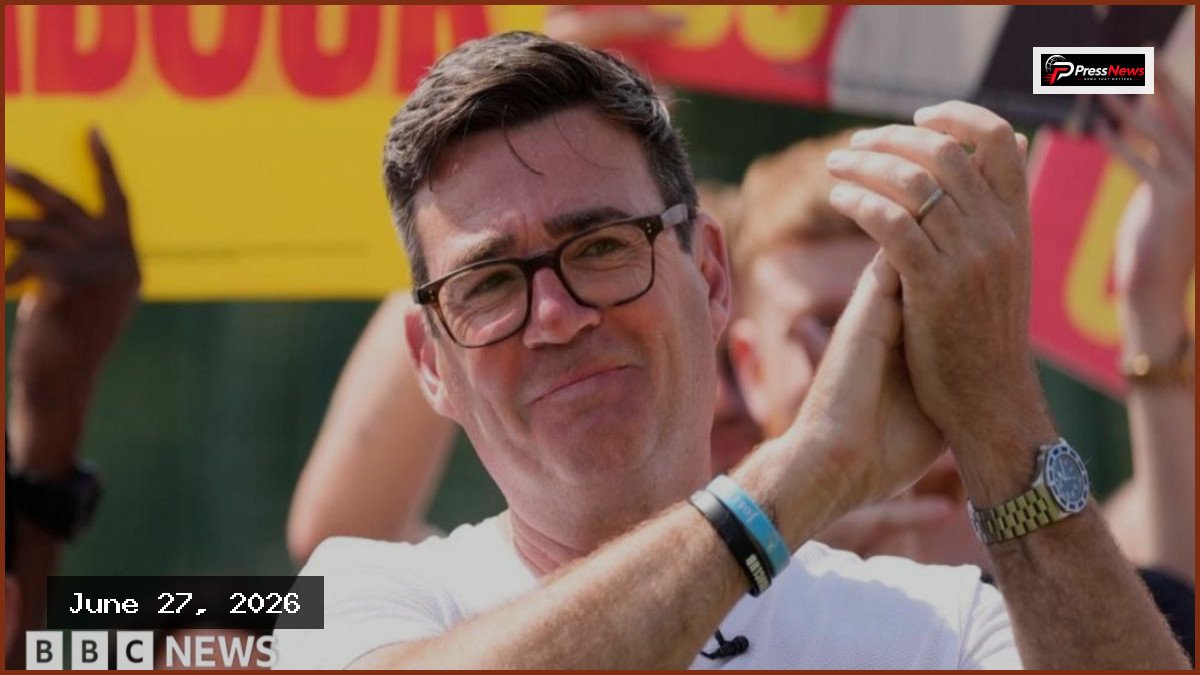
Andy Burnham, widely considered the frontrunner to replace Sir Keir Starmer as prime minister, has been advised by the former Chief of the Defence Staff, Admiral Sir Tony Radakin, that his future policies must pass a so-called “Moscow test.” This requirement follows Burnham’s earlier assertion that new legislation should undergo a “Makerfield test,” reflecting the interests of the constituency that elected him this month.
During an appearance on the BBC’s Sunday with Laura Kuenssberg, the retired military leader emphasized that any successor to the current prime minister must effectively act like a “wartime prime minister” given the current state of international security threats. Sir Tony’s comments arrive as the government prepares to release its highly anticipated defence spending plan, known as the Defence Investment Plan (DIP).
The former military chief stressed that the incoming leader must commit to increasing national defence expenditure to 3.5% of GDP by 2035, noting that current military readiness is “too bare.” Whitehall is currently engaged in intense negotiations regarding how this plan will be funded, with a commitment from the government to release the details before the Nato summit in Turkey, scheduled for 7 July.
Earlier this month, Defence Secretary John Healey and Armed Forces Minister Al Carns stepped down from their government roles, citing concerns that the proposed investment plan lacked sufficient funding. Elaborating on the necessity of the “Moscow test,” Sir Tony questioned how the UK projects its strength to Russia and whether it appears as a robust member of Nato, a formidable nuclear power, and a reliable American ally.
Reflecting on the responsibilities of a prime minister, Sir Tony stated that the primary objective must be to keep the country safe, requiring significant investment in operational resources. He pointed out that current funding levels are falling short, which risks straining international relationships, particularly with Nato partners and the United States. He described the current state of maintenance, stores, and availability for ships, aircraft, and armored vehicles as insufficient.
While the government has pledged to raise spending to 3.5% of GDP by 2035, concerns remain that the draft plan leads to operational cutbacks. Reports suggest the Ministry of Defence sought an additional £28bn through the end of the decade, though the current offer stands at £10bn, necessitating budget cuts across all government departments. Despite the leadership uncertainty, Healey’s successor, Dan Jarvis, expressed confidence in the transition, reiterating that national security remains the government’s top priority and confirming the plan to publish the DIP before the July Nato summit.


