
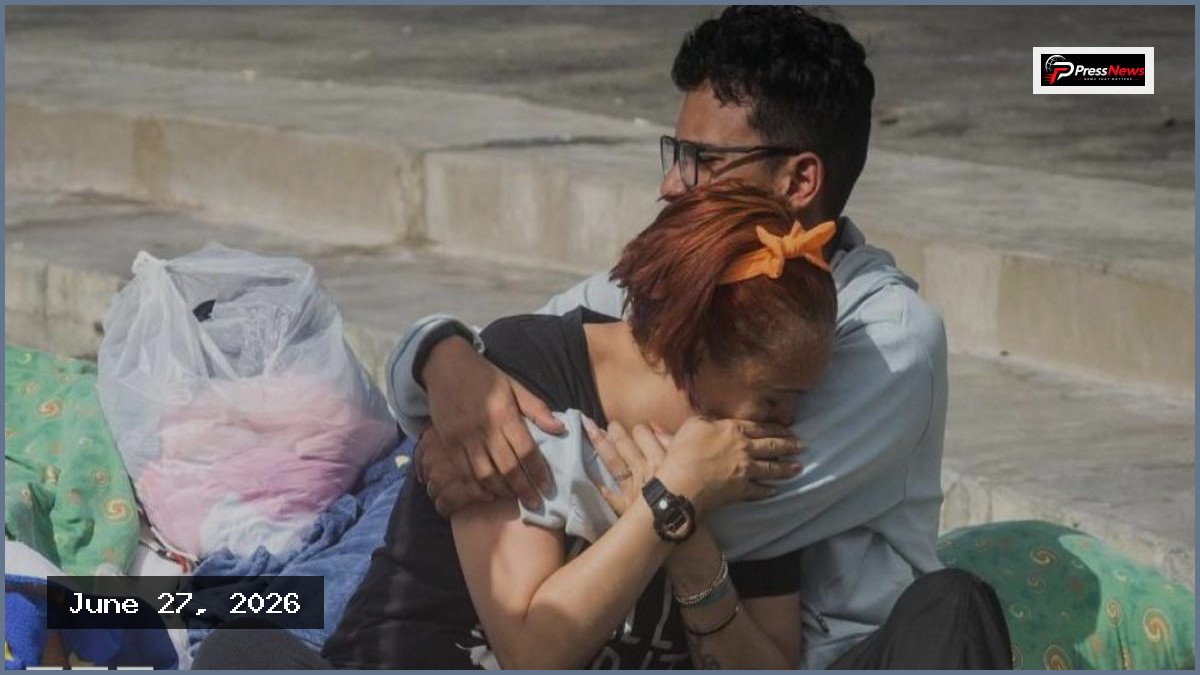
Each morning, the situation for survivors in Venezuela following the recent dual earthquakes feels increasingly bleak. The passing nights bring no respite for those still praying for the survival of missing family members, with sleep frequently disrupted by trauma and the haunting memory of crumbling structures.
For individuals like former police officer Jan Carlos Roa Garcia, the reality is a life lived in uncertainty. While his residence in Caracas remained standing, it was declared unsafe, forcing his family to sleep on the streets. Struggling with the emotional toll, he noted the difficulty of starting over at age 50, particularly given the lack of communication from government officials.
Public criticism of the state’s involvement is growing. Musician Zaira Castro voiced the frustration felt by many, noting that residents have largely turned to mutual aid rather than waiting for government intervention, which she claims is virtually non-existent. Similar tensions flared in the Chacao district, where Interim President Delcy Rodriguez faced direct confrontation from locals who accused the leadership of campaigning rather than providing meaningful disaster relief.
The impact is starkly visible in neighborhoods like Los Palos Grandes, where rescue crews continue to search the rubble of the Petunia building. While some historic structures remain intact, residents confirm that this disaster is unlike anything they have witnessed in their lifetimes. The coastal town of La Guaira has suffered even more severely, with over 100 buildings flattened, fueling both desperation and mounting anger as residents plead for heavy machinery to aid in the rescue efforts.
Despite these challenges, rescue teams, including both local and international units, have shown remarkable resilience. Social media has captured moments of triumph as survivors are pulled from the debris, reflecting the spirit and humor of the local people even in the darkest of times.
The nation’s healthcare system, already under severe strain for decades, is now struggling to manage the influx of patients. Hospitals along the northern coastline are operating at their absolute limits. Survivors, such as Maria Vargas, have shared harrowing accounts of losing family members and homes, yet remain grateful for their own survival. As the critical 48-hour window for rescue operations has closed, many observers describe this period as the most difficult moment in Venezuela’s modern history.


