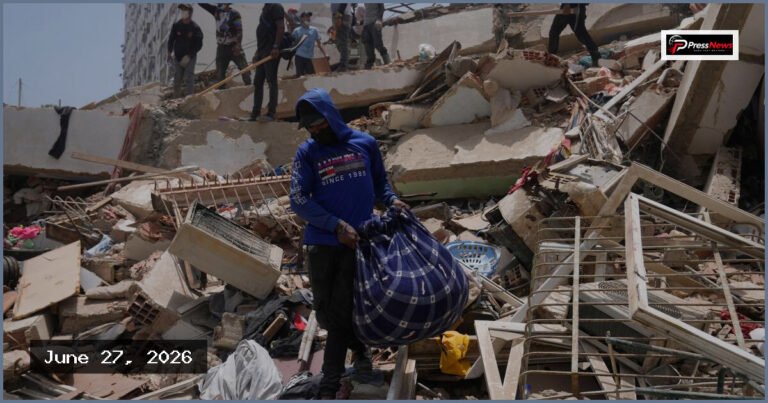
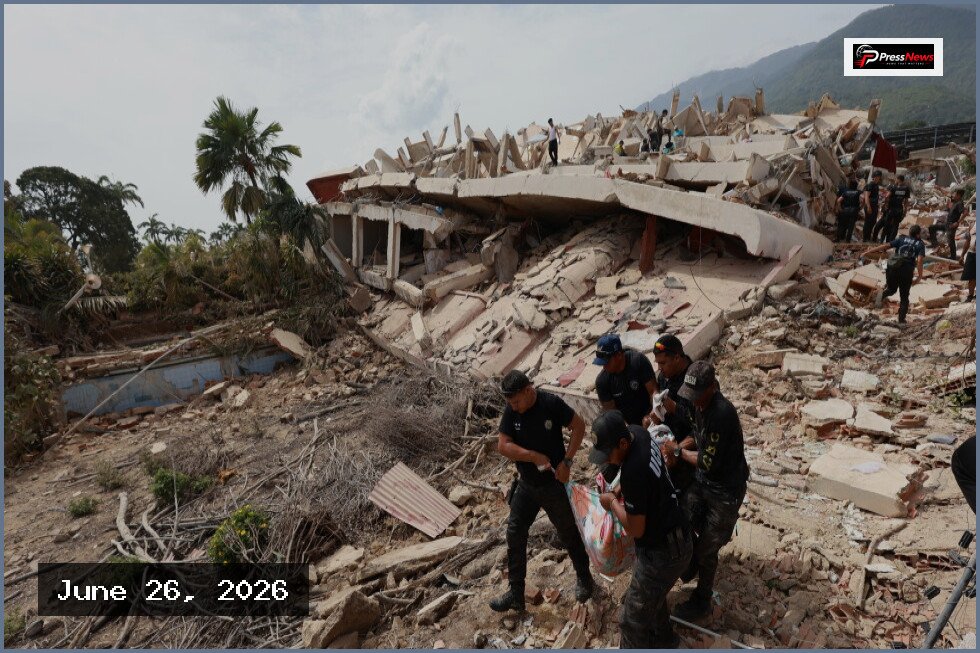
In the wake of back-to-back earthquakes, residents across Venezuela have started conducting their own search for missing relatives, expressing frustration over the limited presence of state rescue teams in the most devastated areas. Although authorities have projected an image of a comprehensive government response, many families describe a glaring absence of official help, a sentiment that has intensified their desperation as the critical 48 to 72-hour window for survival steadily closes.
The devastating seismic events, which hit with magnitudes of 7.2 and 7.5 late Wednesday, have resulted in at least 920 confirmed deaths and 3,360 injuries. According to the U.S. Geological Survey, the quakes were centered near Moron, roughly 170 kilometers west of Caracas. The back-to-back nature of the events, which researchers described as an amplification of vibration, leveled buildings across the northern region. Earlier reports indicated at least 235 deaths and over 4,300 injuries in specific areas, though the total counts continue to rise. National Assembly President Jorge Rodríguez stated that every rescued individual represents a miracle.
Families in La Guaira, located north of Caracas, are struggling to move heavy concrete slabs using only basic household tools like hammers and power drills. Nazareth Jimenez, an anxious resident waiting to find her siblings, nieces, nephews, and friends, issued a desperate plea for international governments to send heavy machinery. Meanwhile, acting President Delcy Rodríguez asserted that the government is mounting a full-scale response and has militarized La Guaira, promising a $200 million reconstruction fund for homes and hospitals. However, residents argue that the state aid is a mere fraction of what is required.
The human cost is immense, with the International Organization for Migration estimating that up to 6.76 million people, including 2 million in Caracas, have been affected. Omar Reyes, who lost his home, recounted that 20 family members have died, and two of his four children remain buried beneath the rubble. In communities like Catia La Mar, survivors have turned to makeshift shelters, living under tarps and hammocks while waiting for food and water distributions.
International support is growing, with 25 search-and-rescue teams comprising 1,000 responders from nations including Germany, China, Switzerland, Turkey, and the United States arriving or en route. To facilitate aid, the U.S. Treasury has waived sanctions through October 23. Locally, fire departments from Tachira, including 45 firefighters and a trained dog named Rescue, have been deployed with hydraulic tools and drinking water. Despite the grim outlook, there have been rare moments of joy, such as the successful extraction of a young girl from a 10-story building that had flattened like a pancake, an effort led by Caracas metropolitan rescue teams.
The government faces a massive challenge as it attempts to manage this disaster amidst long-term economic instability. While state-led caravans and dump trucks have begun moving toward the coast, many citizens remain skeptical of the official response, continuing to wait on the streets for news of their missing loved ones.