
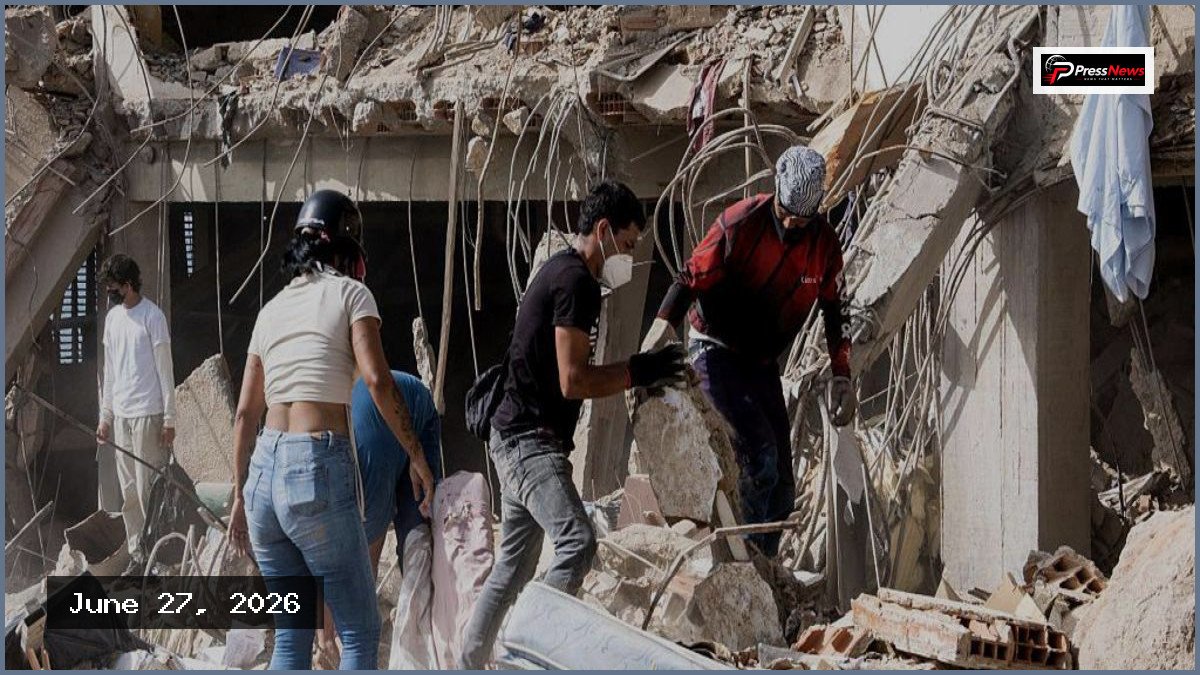
Residents are picking through debris with bare hands and shovels, while drones scan from overhead in a desperate race against time to uncover survivors. In the coastal state of La Guaira, which borders the capital district containing nearby Caracas, the destruction is near-total. This state has been hit the hardest following back-to-back earthquakes that struck Venezuela on Wednesday. Families are searching through the ruins, listening intently for any sound indicating a survivor trapped beneath concrete and metal wire.
Official figures have confirmed at least 1,430 deaths from the magnitude 7.2 and 7.5 earthquakes, with the latter ranking as one of the strongest in the country over the last century. Hundreds of structures have collapsed, and thousands remain trapped. The United Nations estimates that approximately 50,000 people are missing, and the casualty count is rising by the hour. While national rescue teams are limited, international rescuers from Mexico, Spain, the US, and the UK have arrived to bolster the effort.
Humanitarian agencies emphasize that the first 48 to 72 hours are crucial for survival, though this window may extend if those trapped have access to food and water. Jorge Rodríguez, president of the National Assembly, noted that every person saved is a miracle and stated the government will remain transparent regarding the tragedy. Interim President Delcy Rodríguez has pledged a comprehensive rescue response, while government forces distribute water and food.
In Catia La Mar, few structures remain standing. Jesús Suárez, who traveled 200km (124 miles) to search for his son, Jean Suárez, describes the frustration of the search, noting that a lack of sophisticated equipment makes rescue attempts extremely dangerous and often impossible for individuals alone. Other families, such as the relatives of 31-year-old Carlos Eduardo, continue to wait near specific sites where they have heard faint groans or sounds of life, clinging to the hope of a rescue.
Traffic and onlookers have sometimes hindered the work, leading soldiers and Mexican volunteers to call for silence to better hear signs of life. Those with drones are using them to scan hard-to-reach areas, while families huddle around video feeds hoping to recognize a piece of clothing or personal item. As time passes, the unofficial death toll rises alongside other consequences, including concerns about sanitation. Residents like Glendys Delgado and 27-year-old Deiyer Gabril report that the smell of decay is beginning to affect communities in areas like Macuto and Caribe.
Authorities reported on Friday that 861 volunteers from nations including Mexico, the US, El Salvador, Switzerland, and Colombia are on the ground. Interim President Rodríguez confirmed discussions with US President Donald Trump and Secretary of State Marco Rubio, who reaffirmed their commitment to aid. Survivors remain in a state of shock, many losing everything in an instant. Alexandra Gabino, 28, is currently sheltering in a car at the damaged Simón Bolívar International Airport with her husband and two children, aged seven and two. Like many others, she struggles to remain strong for her family despite the profound pain and helplessness of the situation, noting that while staying alive is what matters, the suffering and loss they are witnessing is incredibly difficult to process.


