
Spectators traveling from across the globe to the World Cup are bringing distinct displays of national character, creating some of the most memorable moments of the tournament. Following Norway’s 3-2 victory over Senegal in New Jersey on Monday, the focus shifted from the pitch to the stands, where thousands of Norwegian supporters began a synchronized rowing motion while seated. The players eventually joined in, with captain Martin Ødegaard striking a large drum to set the rhythm. The routine involves fans sitting shoulder-to-shoulder and mimicking the movement of a Viking vessel while chanting “ro,” the Norwegian word for “row.”
This performance has become a signature demonstration of support, seen on subway trains and escalators throughout New York and New Jersey. Nashville resident Ashley Locke, 34, joined a group row in Times Square and noted that the shared energy is a unique experience found only at the World Cup. The trend first appeared during a friendly match against Switzerland in March and has since evolved into the team’s trademark celebration. Beyond the rowing, the Norwegian squad leaned into their heritage by posing in Viking costumes for their departure photos. Before this tournament, Norway had not qualified for the World Cup in 28 years, yet they have now successfully rowed into the knockout stages.
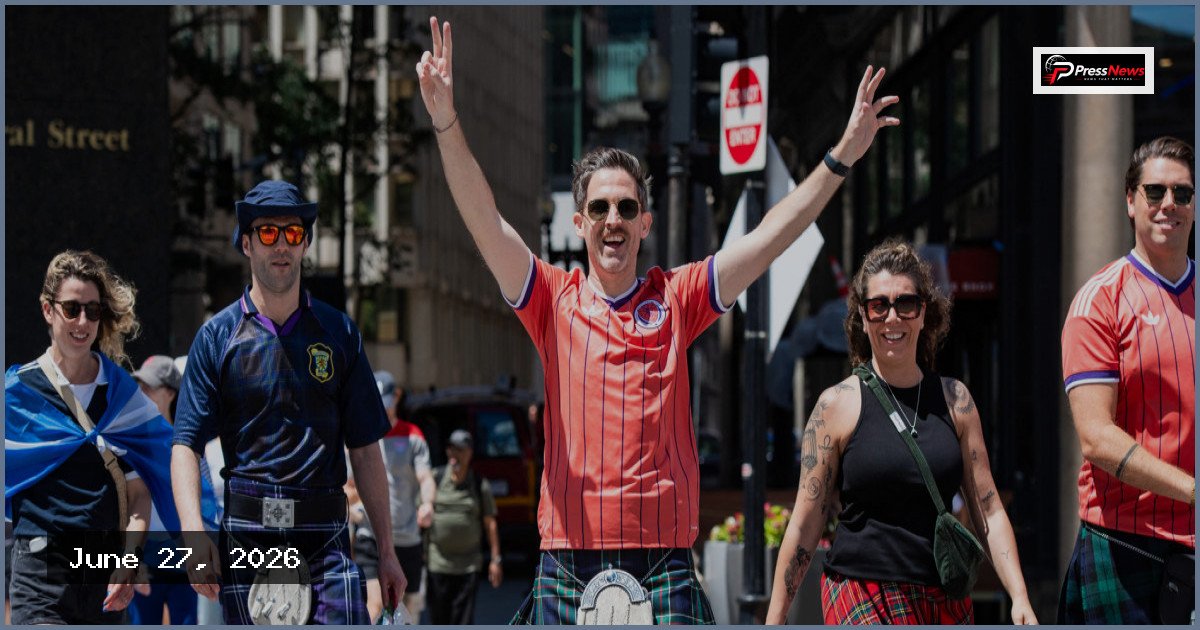
Scotland’s supporters, known as the Tartan Army, have also left a significant mark during knockout matches in Boston and Miami. Roughly 50,000 Scottish fans traveled to Boston, often appearing in traditional kilts and filling the streets with the sound of bagpipes. Ahead of their game against Brazil, a large group brought their festive spirit to a Miami Marlins baseball game. Fans have also continued the modern tradition of placing traffic cones on local statues. While Swiss fans remain identifiable by their signature cowbells, the familiar sound of South Africa’s vuvuzela is notably absent, as the plastic horns were banned from stadiums following the 2010 tournament.
Paul Widdop, an associate professor of sport business at Manchester Metropolitan University, suggests that these stadium behaviors represent a shifting landscape in how culture is disseminated through global sports. He notes that the authenticity of these practices is less important than their ability to function as simple, repeatable forms of expression that bridge cultural gaps. For fans from the Democratic Republic of the Congo, national pride is displayed through Michel Nkuka Mboladinga, known as Lumumba Vea. The superfan portrays the country’s assassinated independence leader and first prime minister, Patrice Lumumba, by standing perfectly motionless in a red jacket and tie.
Mboladinga gained prominence during last year’s Africa Cup of Nations and recreated the pose of the Lumumba statue found in Kinshasa during a match against Colombia in Boston. Although Congo lost 1-0, Widdop emphasizes that nations are becoming visible through these off-field performances, which hold deep emotional weight given the country’s ongoing struggles with conflict and health crises. Mboladinga, who previously missed an opening match due to Ebola-related quarantine rules, has become a viral figure. Ultimately, these displays allow fans to produce recognizable emotional signals that transcend borders, illustrating a profound connection between sports and cultural identity.